
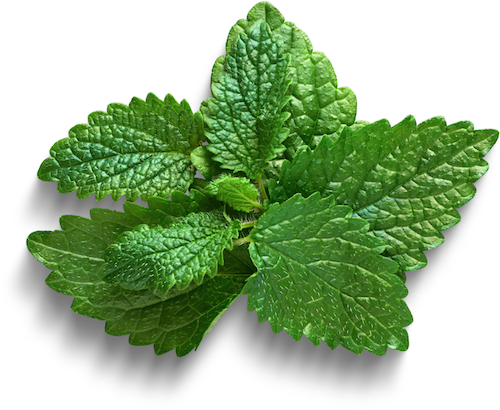
Lemon Balm is a fragrant herb with oval, slightly toothed leaves. This perennial is native to the mountains of southern Europe and northern Africa. Small, white flowers bloom in summer and their nectar attracts pollinators.
Fresh lemon balm can be added to salads for a zesty, tangy flavor. It also pairs well with poultry, fish, and fresh vegetables, and can be used to garnish drinks.
Lemon balm can be started from seed sown indoors about four to six weeks before the last frost, although seeds may be slow to germinate if not stratified. Gently press seeds into soil (do not cover). Transplant seedlings into the garden when they are 2–3 inches tall, spacing plants 18 inches apart. For best results, sow directly outdoors in fall or early spring.
Plants grow quickly, self-seed and spread aggressively if not controlled. To control growth, cut off seed heads before they have a chance to dry and spread. Cut back lemon balm after flowering to produce a fresh flush of leaves. Lemon balm can be planted in containers to control their spread.
To harvest, cut several inches of top growth off the plants at flowering during the first year. On established plants, two or three cuttings may be made in a season. The leaves may be used fresh or dried.
Allow the plant to go to seed, making sure to harvest flower pods before they break. Separate the dried stalks from the stem. Roll dried flower or stalk over your open palm and separate the tiny seeds from the chaff. Store in a cool, dry place for up to three years.